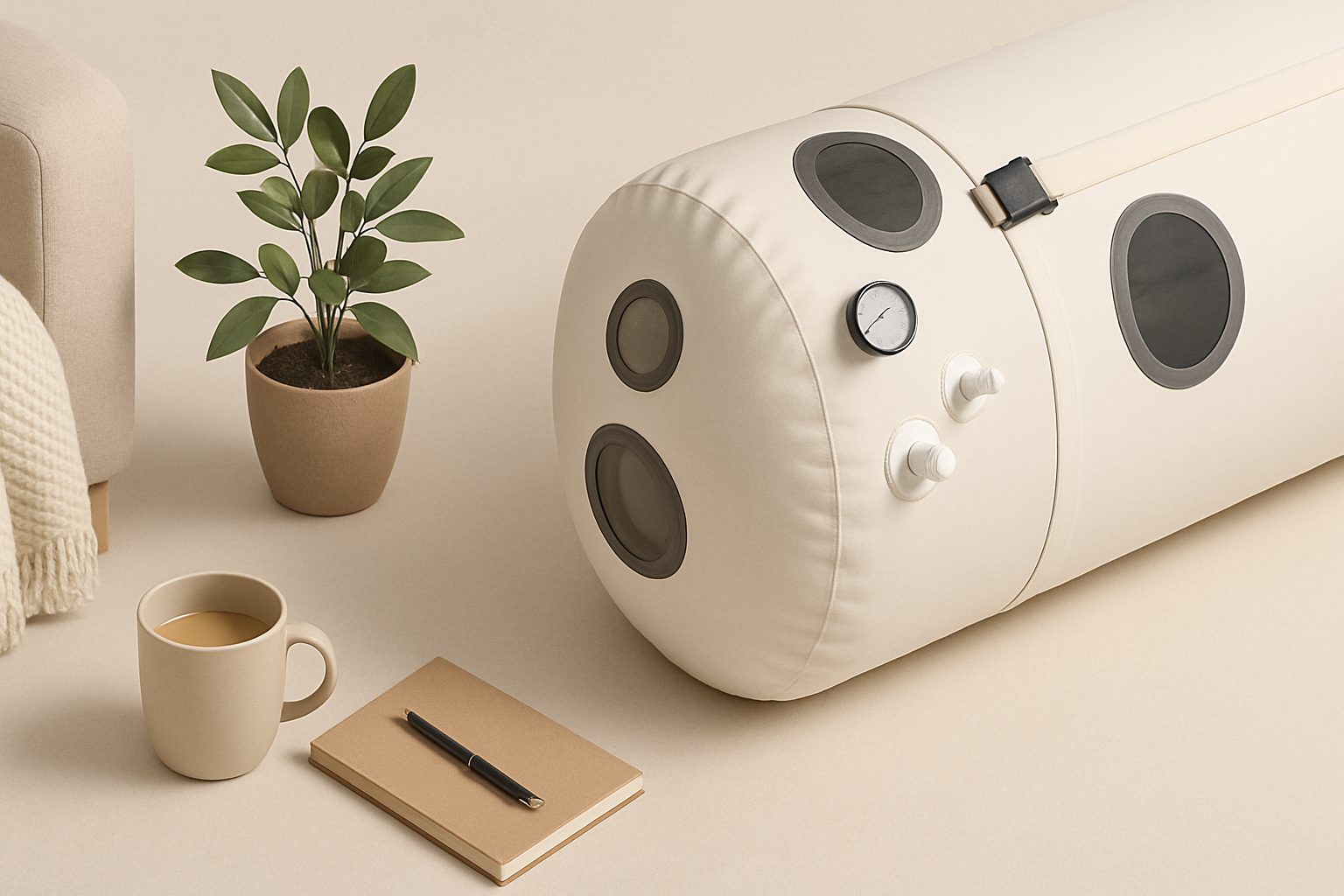
Is Home Hyperbaric Oxygen Therapy Safe in the UK? Risks, Regulations & Who Should Avoid It
Hyperbaric oxygen therapy (HBOT) has gained interest among UK consumers seeking recovery support, wellness benefits, and athletic performance gains. But buying a chamber for home use raises a legitimate question: is it safe? The answer isn't simple. Safety depends on device specification, your health status, proper setup, and regulatory compliance.
What the MHRA Says About Home Hyperbaric Chambers
The Medicines and Healthcare products Regulatory Authority (MHRA) classifies hyperbaric chambers as medical devices in the UK. This matters because it sets baseline standards for safety and quality.
Most consumer chambers operate at 1.3 atmospheres absolute (ATA) — legally classified as lower-risk medical devices. At this pressure, they fall under CE marking requirements and MHRA oversight, but the regulatory burden is lighter than for higher-pressure clinical chambers (2.4–3.0 ATA), which require stricter certification and are typically found in hospitals.
The practical takeaway: a 1.3 ATA chamber meeting CE standards and sold by a reputable UK retailer will have undergone safety testing and quality checks. Buying from unaccredited sellers or unmarked imports removes this assurance and carries genuine risk. Always verify CE certification and ask for MHRA compliance documentation before purchase.
The Oxygen Enrichment Risk
The most serious hazard in any hyperbaric chamber is oxygen toxicity and fire risk. Here's why.
A chamber raises atmospheric pressure, and if oxygen concentration inside is elevated beyond normal air (21%), the oxygen partial pressure climbs sharply. This combination—higher pressure + higher oxygen—creates an ideal conditions for spontaneous ignition. Items that won't burn in normal air (including some textiles, oils, and even your own skin under certain friction) become flammable.
At 1.3 ATA, the risk is substantially lower than at clinical pressures, but it isn't zero. Safe operation requires:
- No smoking or open flames near the chamber
- Avoiding oil-based products on skin (including lotions and sunscreen)
- Keeping the chamber clean and free of lint, dust, and organic debris
- Using only medical-grade oxygen if supplementing air (and not exceeding safe partial pressures)
- Following manufacturer instructions on treatment duration and pressure settings
Many home users operate chambers on compressed air alone—no oxygen supplementation—which eliminates this risk entirely. If you're considering oxygen enrichment, discuss it with a healthcare provider first and ensure your device and your protocol are explicitly designed for it.
Who Should Avoid Home Hyperbaric Therapy
Certain health conditions make HBOT unsafe, regardless of chamber quality. If you have any of these, consult your GP before considering a home chamber:
Absolute contraindications:
- Untreated high fever
- Chemotherapy (concurrent with HBOT)
- Disulfiram (Antabuse) use for alcohol dependence—HBOT can trigger severe reactions
Relative contraindications (discuss with your doctor):
- Uncontrolled diabetes
- Chronic obstructive pulmonary disease (COPD) with CO₂ retention
- History of spontaneous pneumothorax
- Upper respiratory tract infections or nasal congestion (pressure equalisation problems)
- Recent thoracic surgery or chest trauma
- Claustrophobia or severe anxiety disorders
The pressure changes in a chamber can also trigger barotrauma—injury from pressure differential. The most common form is middle ear squeeze, where pressure inside the ear fails to equalise with the chamber's pressure. This is usually mild and reversible but can cause discomfort or, rarely, eardrum perforation. People with sinus problems or Eustachian tube dysfunction are at higher risk.
Common Side Effects and What's Normal
Short-term side effects are usually mild:
- Temporary ear pressure or mild discomfort (equalisation-related)
- Mild fatigue after sessions
- Dry eyes or nasal passages
- Rarely, near-sightedness lasting days to weeks after a course of sessions (reversible)
These typically resolve without intervention. However, if you experience sharp ear pain, dizziness, chest pain, or shortness of breath during or after a session, stop immediately and seek medical advice.
Setting Up Safely at Home
Safe home use depends on installation and environment:
- Locate the chamber in a well-ventilated space away from bedrooms and kitchens
- Ensure fire safety: keep flammable materials away, have a fire extinguisher nearby, and maintain clear access for quick exit
- Check electrical safety: use a dedicated circuit, avoid extension cords, and have the power supply inspected if you're uncertain
- Use a pressure gauge to verify the chamber maintains the intended pressure
- Clean regularly according to the manufacturer's schedule
- Store oxygen cylinders (if used) safely and separately, following HSE guidance
When to See Your GP First
Before starting home HBOT, book an appointment with your GP if:
- You have any chronic health conditions
- You're taking prescription medications
- You've had recent surgery or significant injury
- You're pregnant
- You have a history of lung collapse or severe breathing problems
- You simply want medical clearance before beginning
Your GP isn't required to authorise home HBOT, but they should understand your health profile and flag any risks specific to you. They can also advise on interactions with existing conditions or medications.
The Trust Factor: Pressure (ATA) and Device Quality
Not all home chambers are equal. The 1.3 ATA "soft chamber" range represents the lower-risk end of the market and is where most home users operate safely. Chambers claiming higher pressures (1.5–2.0 ATA) may carry higher oxygen enrichment risks and regulatory ambiguity—clarify specifications and certification before buying.
Reputable sellers provide:
- CE certification visible and verifiable
- Clear manual with safety protocols
- Warranty and after-sales support
- Transparent pressure and oxygen specifications
- Customer reviews mentioning safety and ease of use
Unusually cheap chambers, unmarked imports, or sellers unwilling to provide compliance documents are red flags. The cost of a safe, certified device is genuinely higher than unregulated alternatives—and that difference reflects real safety engineering.
The Bottom Line
Home hyperbaric therapy can be safe in the UK if you choose a certified device, follow manufacturer instructions strictly, verify it's suitable for your health status, and maintain it properly. The safety bar is highest at 1.3 ATA with no oxygen supplementation, operated on compressed air alone. Before you buy, consult your GP if you have any health concerns, research the seller's credentials, and ask for full MHRA and CE compliance documentation. A safer device today means fewer complications—and fewer regrets—tomorrow.
More options
- Portable Hyperbaric Chambers (1.3–1.5 ATA Soft-Shell) (Amazon UK)
- 10-Litre Oxygen Concentrators for Home HBOT (Amazon UK)
- Hyperbaric Chamber Inner Liners & Comfort Accessories (Amazon UK)
- Anti-Static Floor Mats & Hyperbaric Safety Equipment (Amazon UK)
- OxyHealth & Premium Hard-Shell Hyperbaric Systems (UK Distributors via AWIN) (Amazon UK)